
The grass was crunchy and brown underfoot, and the air dry and dusty. The Harmattan winds had come to the north of Ivory Coast, bringing with them fine Sahara dust.
The humidity that we were used to, having come from a tropical rainforest area in the South West, was replaced by intense dryness. We had travelled to Ferkessédougou Hospital, two weeks before I was due to give birth to our fourth child, at the end of a pregnancy fraught with malaria and persistent nausea.
The drought seemed like a good picture of how I was feeling. We were fully into the swing of ministry in our area, and the opportunities seemed endless. On top of home-schooling, there were the children’s clubs and the training of children’s workers, and the local church leaders had asked me to take the teenage girls each week for Bible study and craft skills. The only time that suited them was 9am on a Saturday morning, my only day off, but it seemed there was no one else to do it … and so it went on. Feeling exhausted physically, emotionally and spiritually, I was glad of this break from routine now, when my only duty in the days leading up to the birth was to keep up home-schooling, with help from my husband.
Blessed is the man who trusts in the Lord, and whose hope is the Lord
Difficult, dry times come to all Christians. Missionaries are not immune. In fact, there are perhaps more aggravating factors for Christians who are away from their home church and regular fellowship in their mother tongue. They are giving out all the time and, perhaps, not being held accountable for how they are seeking to be replenished spiritually. Irritations, like a broken-down fridge in tropical heat, endless red tape, health issues, lack of privacy, and feeling misunderstood in a second language, can multiply easily in a culture that is unfamiliar and sap the physical and spiritual energy. Then there can be the lack of Bible teaching and fellowship, and the constant demands to teach others. And, so, drought sets in. God sees and knows when we need to stop and take stock, and in his wisdom, he provides opportunities to do this when we most need it.
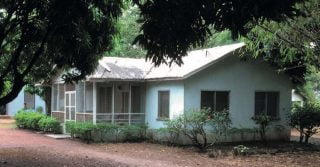
On that dry, dusty hospital compound, God gave me a very basic object lesson; he knew I needed it to be simple and clear! As we settled into our little wooden house, we did not sleep well at first. The house was overshadowed by a huge mango tree which at that time was in full fruit. Each night the fruit bats would have their fill, and the usual chatter of crickets in the night was punctuated by loud bangs from the mangoes that dropped on the tin roof of the house as they feasted. As I explained the source of the noise to our children, the inevitable question came, “How come there is no rain and the grass is brown and dry, but the mango tree has green leaves and fruit?” Naturally, I began to talk about the depth of the roots of the mango tree and how they could still reach enough moisture to grow and thrive, even when the external supply dried up. As I spoke to my children, the words of Jeremiah 17, verses 7-8 came to mind, “Blessed is the man who trusts in the Lord, and whose hope is the Lord. For he shall be like a tree planted by the waters, which spreads out its roots by the river, and will not fear when heat comes; but its leaf will be green, and will not be anxious in the year of drought, nor will cease from yielding fruit.” I also remembered Psalm 92, verses 12, the motto for the UEESO-CI church group that we worked with, “The righteous flourish like the palm tree and grow like a cedar in Lebanon.”
It was so clear to me, as I sat and explained to my children, that God had a lesson for me. I had stopped focusing on feeding my roots and concentrated on the fruit. I had forgotten that what is inward and hidden is much more important that what is outward and seen, and that I could not hope to go on giving if I did not take time to rest physically and receive from God the spiritual food and drink for which I was so hungry and thirsty.
How long does it take for a heart to become a desert? Not years, nor even months, which explains the need to “Keep your heart with all vigilance, for from it flow the springs of life.” (Proverbs 4:23)
As I left the hospital a few weeks later with our new-born daughter, it was with a new resolve that these roots would seek the water. But how is a busy missionary to do this? For me it meant taking stock of all that I was involved in, and asking myself what my main priorities under God really were, and then learning to say no to things that were extra – the teenage girls group found a better home. It meant talking to my husband and trusted friends and asking them to pray for and advise me, and it meant consciously guarding my time alone with the Lord to read his Word and pray, often called the ‘quiet time’ (although it can be more like a raging war at times). It also meant taking more time to listen to Bible teaching from home and memorise Bible passages. Small changes, but a new determination to “send out the roots by the stream.”
Drought and storms are inevitable as long as we live in this broken world, but there is an unseen source of nourishment for the Christian, so that even in the dry season, the leaves stay green and growth continues. It’s a lesson that I never stop learning.
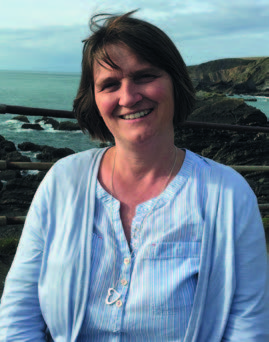
– Rosalind Brown
(Former missionary in Ivory Coast, now Personnel/Finance Assistant in the Swindon UFM office)