
‘Do not stop him’. That’s what Jesus said to his disciples when they asked him if they should stop someone, who wasn’t one of them, casting out demons (Luke 9:49-50). If there is one thing I’ve experienced working with Indians and the diaspora, it’s this: Christians can react to those with different backgrounds. Have you had experience of ‘other’ Christian groups?
I’m Indian and Welsh. I work as an evangelist and Christian consultant dealing with the challenges of church growth. My time is spent preaching, discipling and encouraging Indian diaspora groups worldwide, as well as churches in Wales. Statistics show that Indians live in nearly every country of the world1. Indian Christians are similarly spread.
A sample of my past year reflects this. In Edinburgh on a Saturday afternoon, I’m sitting on the lounge floor as the band practices for worship and biryani is cooked ready for Sunday fellowship. In Bangkok at an annual global Indian summit, I’m just one of many Indians who’ve flown in, ready to share what the Lord’s doing around the world. Thursdays are Zoom nights where I meet fourth-generation Indian pastors in South Africa. We discuss caring for pastors and elementary needs where resources are limited, like toilets and education. I also have speaking engagements in the USA, Lithuania, Germany and England.
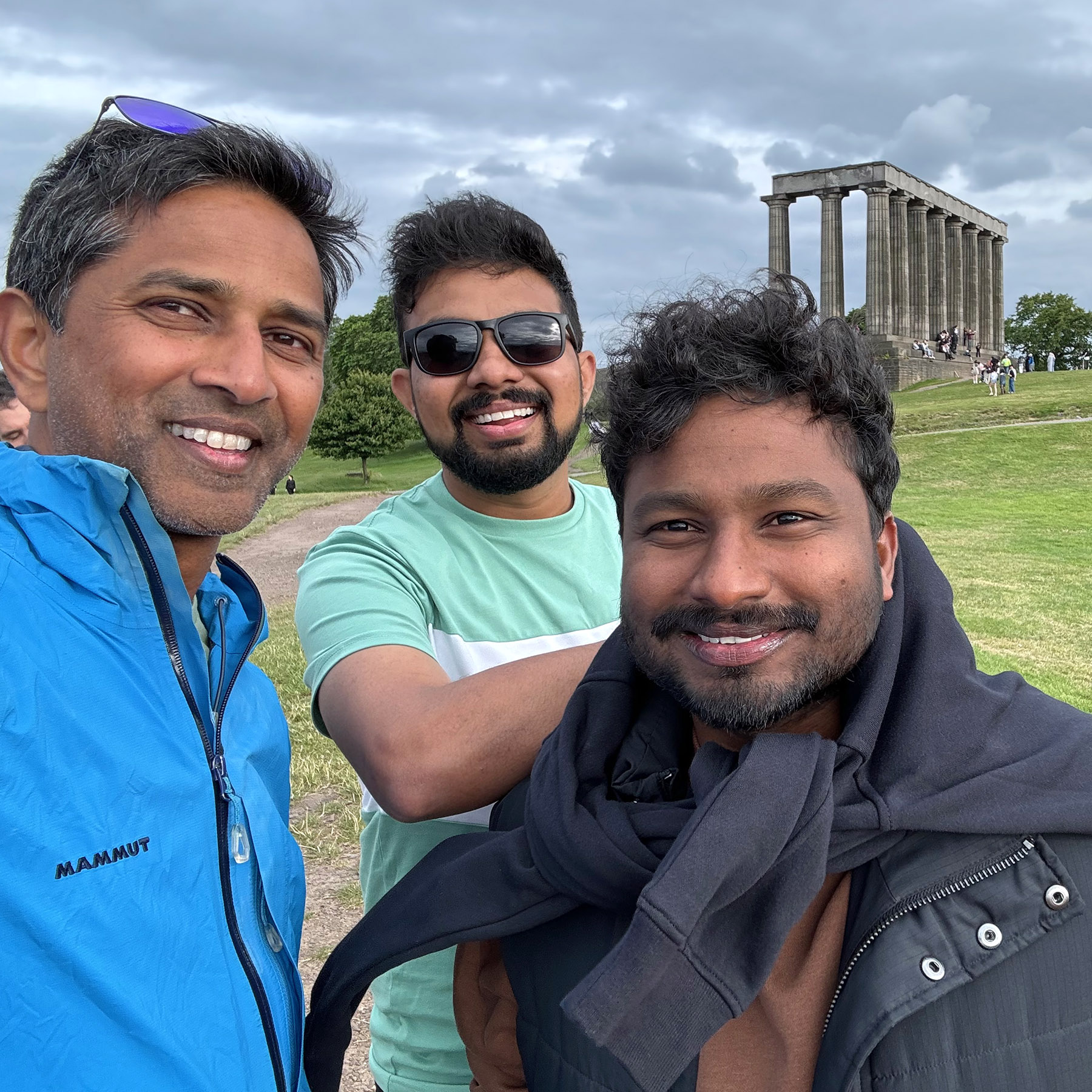
Another common scenario is teaching Indians about marriage (pictured above) but then showing practical love, helping a young man establish the first home before he brings his bride back from India.
These are just some of the diaspora situations, before even thinking about church meetings: there’s loud music, people on phones, constant movement, singing, and skits. It’s long, colourful and diverse. Many gifts are seen and experienced. Hospitality is not something quick but full of food, family, fellowship, and friends. There’s nothing anaemic here – just a rich Indian experience that in a small way feels like home. It’s beautifully exhausting even for a Welsh Indian!
This ‘otherness’ matters …
Why is it that when I meet Indian Christians many are happy to be up-front and open with me? Is it because of the regular opportunities they are given to help them belong? Why do I meet Hindus in Indian churches and fellowships? Is it that they feel welcome due to cultural similarities rather than feeling the barrier of religious differences? And transition also then happens into local churches as well as this complementary existence of culturally Indian groups.
One feature we share with the global church is this – we all have traditions and church microcultures. This is often where the Bible clashes. Is any group always biblical in what it does? The only way to truly know is to listen to the Word of God, obeying and applying it to different contexts we’re called to. Whether it’s diaspora or elsewhere, we all need to be more like Jesus.
Aren’t you glad for brothers and sisters who chart hard-to-reach places … in order to make disciples?
And when we’re tempted to have our own biases, like the disciples, I’m reminded that we really need the body of Christ to do the things we cannot. It was the ‘others’ in Luke 9 who could heal! Aren’t you glad for brothers and sisters who chart hard-to-reach places and some who even cross floods and snakes in order to make disciples? Others give quantity and quality hospitality for those who are lonely and far from home.
Don’t we all practice our faith with variation and therefore need to be obedient and grow in wisdom and maturity? But what thrills me most is that Jesus in Luke 9:50 said ‘don’t stop him’. The modern-day equivalent is me, and most likely you – I’m glad Jesus doesn’t stop us!
Source: 1. https://www.mea.gov.in/population-of-overseas-indians.htm
Paul Daniel is based in Wales, serving under the Associating Evangelical Churches of Wales (AECW) and as an Associate Mission Partner with UFM. Born in South India and raised in Wales, since his conversion in 2003, he has been supporting churches in reaching Indians in the UK, USA, and Asia.